
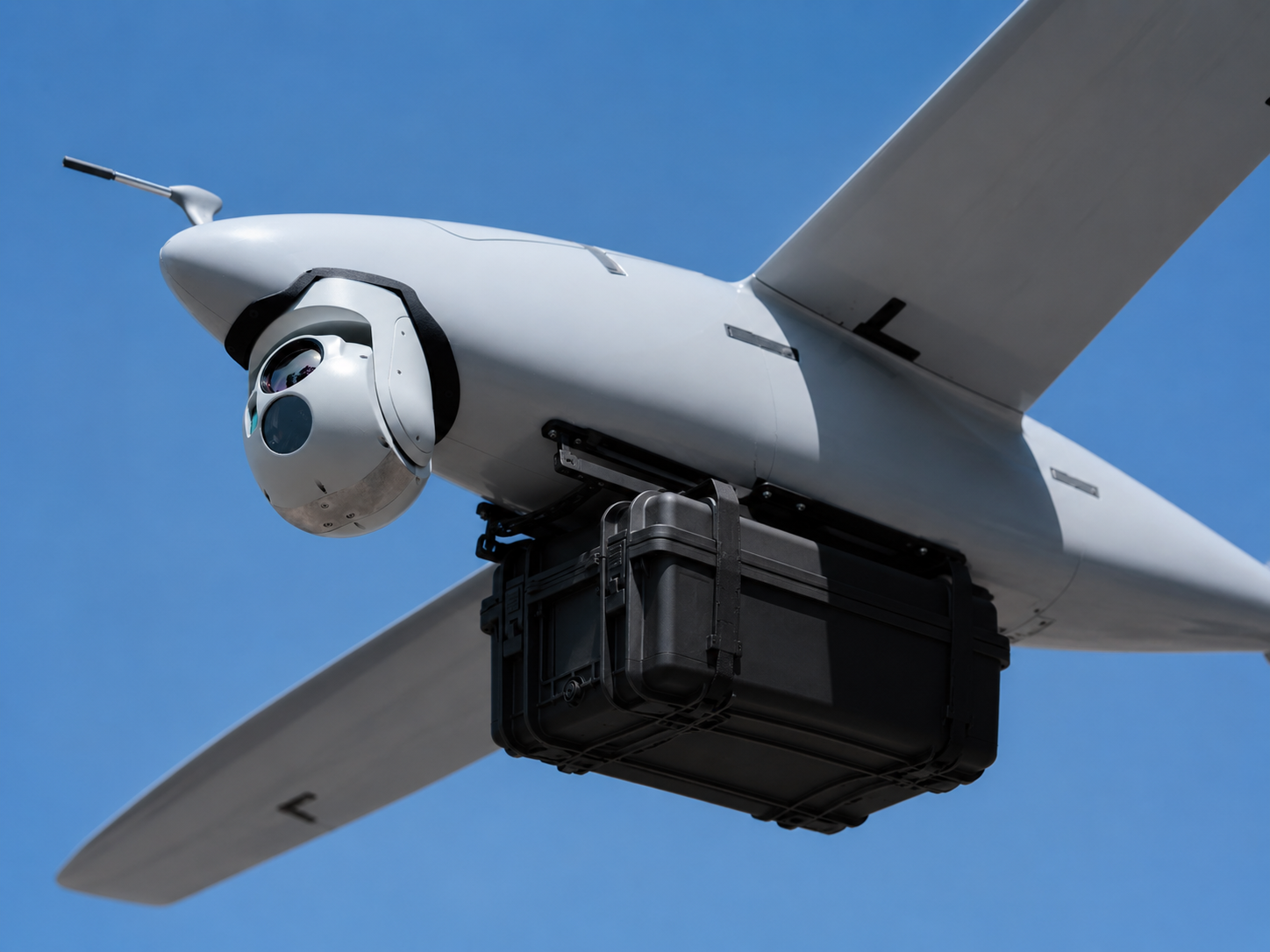
Modular Payload Integration for Custom VTOL Security UAVs
A modern unmanned aerial vehicle (UAV) becomes truly useful when the aircraft, mission payload, communication architecture, intelligent processing, and operator interface function as one integrated system. A sensor may have strong standalone specifications, but reliable field performance depends on how effectively it is matched to the aircraft’s payload limits, power budget, center of gravity, data requirements, and operational purpose.
At UHUAV, modular payload integration is a central part of our engineering approach. We develop selected UAV platforms around the customer’s mission instead of forcing every mission into a fixed aircraft configuration. This enables a single platform architecture to support surveillance, critical infrastructure protection, inspection, public safety, communication support, logistics, mapping, and other customer-defined UAV applications.
Our objective is to develop a commercial-grade VTOL security UAV that can support different mission packages while maintaining flight stability, reliable communication, manageable operator workload, and configuration-specific performance. Every integration is evaluated as a system-level engineering task, and final capability is determined through technical review, platform limits, mission requirements, and validation testing.
Why Modular Payload Integration Matters
A payload is not simply an item attached to an airframe. It can affect endurance, stability, aerodynamic efficiency, thermal behavior, power consumption, communication bandwidth, and mission reliability.
For this reason, payload integration begins with the operational objective. Before a mission package is selected, the project should define:
-
Required observation, detection, measurement, communication, or response function
-
Day, night, or mixed-environment operation
-
Payload mass and physical dimensions
-
Electrical power and thermal requirements
-
Data, video, and control needs
-
Ground-station interaction
-
Environmental conditions
-
Safety and regulatory limits
-
Required endurance, range, and deployment method
This requirements-driven process helps match each UAV application with the correct aircraft class and mission architecture. It also reduces the risk of selecting a payload that cannot be used effectively in the intended operating environment.
Custom Drone Payload Packages
UHUAV can develop a custom drone payload package around customer-specific operational priorities. Depending on the selected platform, available payload capacity, center-of-gravity envelope, power budget, and legal requirements, integration options may include:
-
Stabilized EO/IR imaging systems
-
Thermal imaging systems
-
High-zoom daylight observation
-
Distance-measurement capability
-
Mapping and inspection sensors
-
Communication-relay equipment
-
RF monitoring capability
-
Searchlights and area-illumination systems
-
Loudspeaker and two-way communication systems
-
Environmental and industrial sensing
-
Approved emergency equipment
-
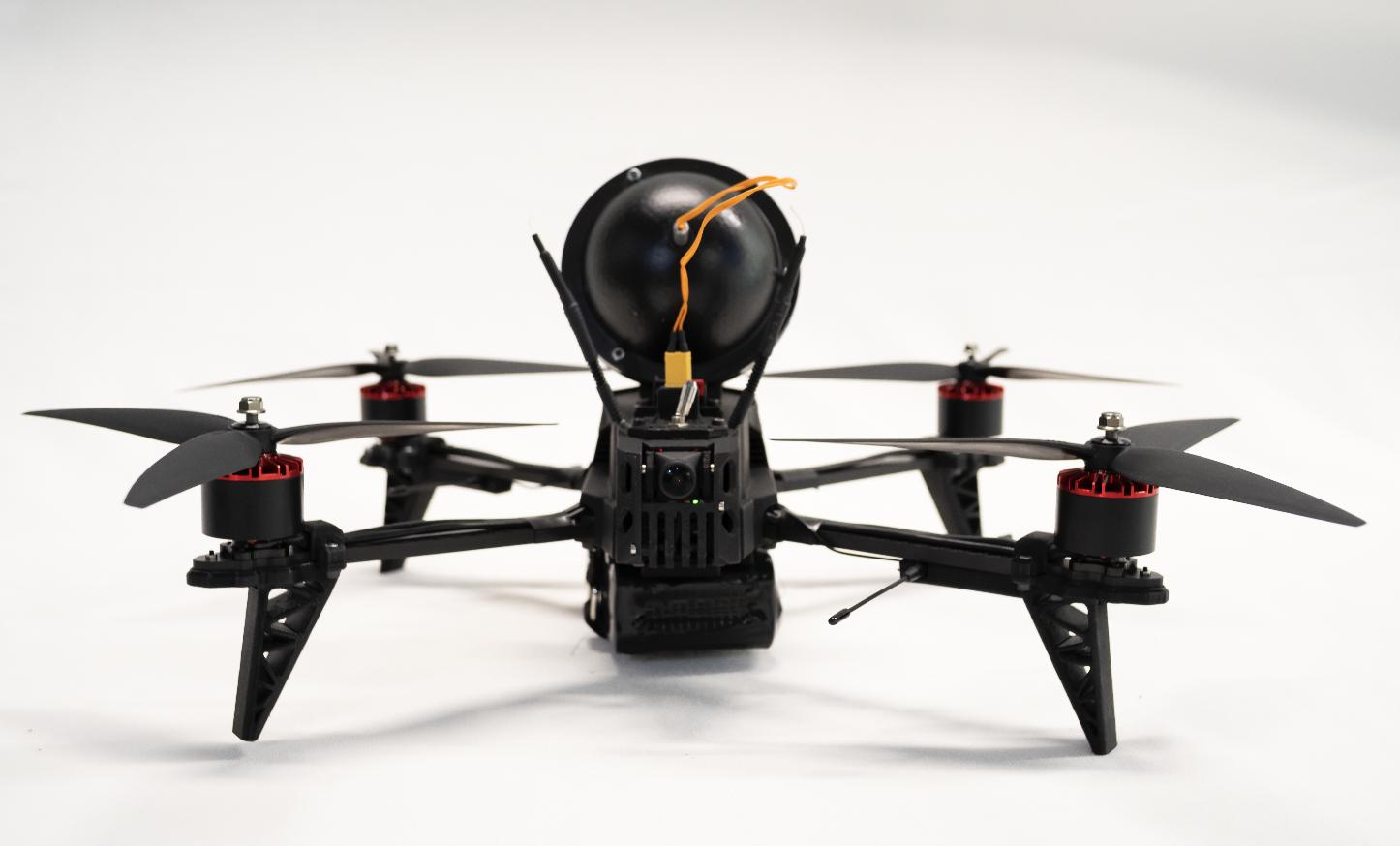
Controlled payload-release mechanisms
A custom UAV payload may require dedicated mounting, protected power distribution, data integration, software control, video handling, operator commands, and mission-specific safety logic.
The objective is not merely to make the payload fit. The objective is to make it operate as a dependable part of the mission.
EO/IR and Thermal Surveillance Payloads
For security and surveillance operations, EO/IR payloads are among the most valuable mission configurations. An EO/IR surveillance drone can combine stabilized daylight observation, optical zoom, and infrared sensing to support day-and-night operations.
A thermal surveillance drone may support:
-
Person and vehicle detection
-
Night patrol
-
Perimeter monitoring
-
Search and rescue
-
Heat-anomaly observation
-
Industrial inspection
-
Fire-risk assessment
-
Observation in low-visibility conditions
High-zoom daylight imaging can provide detailed visual information at operationally useful distances, while thermal sensing can support detection when visible-light conditions are reduced.
The imaging system, mission processing, communication link, and operator interface must work together. Camera control, video selection, zoom behavior, target tracking, recording, geolocation, and event display are all part of the payload-integration workflow.
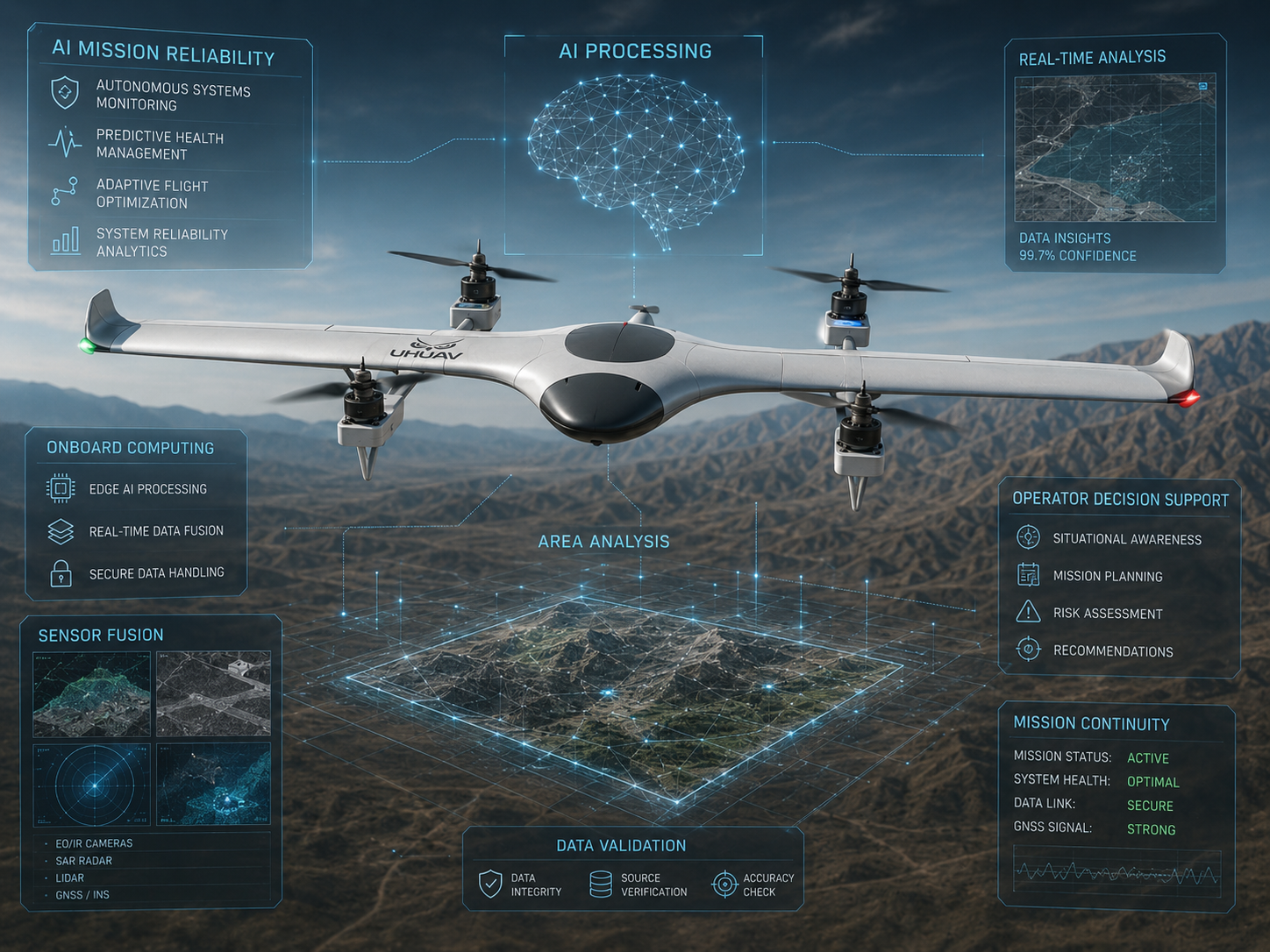
AI-Assisted Payload Operation
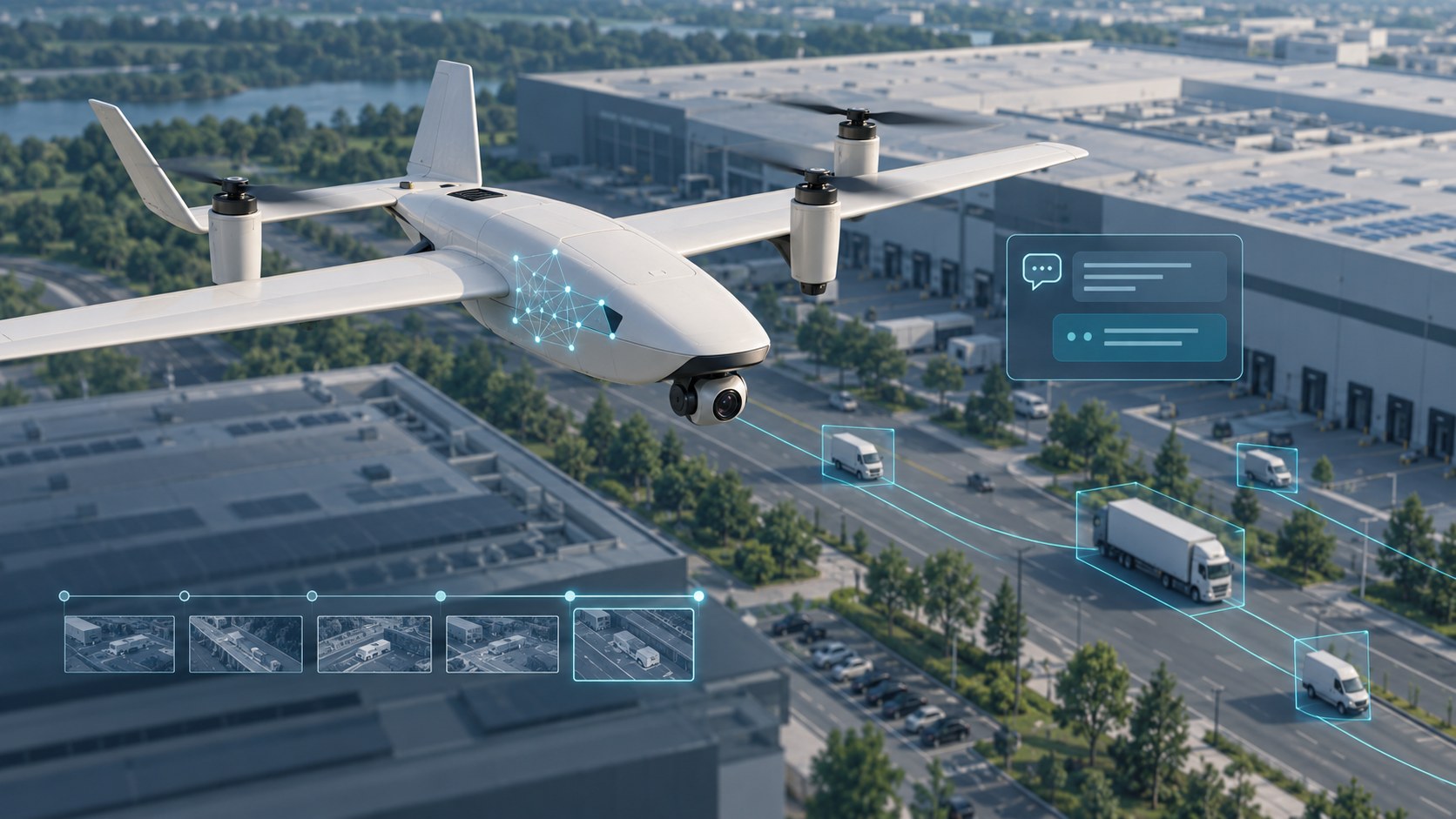
Intelligent onboard processing can transform a passive sensor into a mission-aware subsystem. A target tracking drone can use computer vision to detect, select, follow, and re-acquire mission-relevant objects, subject to sensor quality, operating distance, lighting, weather, visibility, and model performance.
AI-assisted payload functions can include:
-
Person or vehicle detection
-
Operator-selected target tracking
-
Automatic sensor steering
-
Thermal-anomaly highlighting
-
Event generation
-
Geolocated detection records
-
Alert prioritization
-
Image and video analysis
-
Post-mission search and review
The operator remains responsible for validating detections and deciding how the mission should continue. Artificial intelligence supports situational awareness; it does not replace human authority.
For customer-specific projects, detection classes, alert rules, tracking behavior, recording logic, and operator-interface functions can be adapted to the intended mission.
Swappable Payload Architecture
A swappable drone payload architecture allows the same aircraft to support different mission profiles without replacing the complete platform.
For example, one aircraft may be configured as:
-
An EO/IR surveillance drone for perimeter patrol
-
A thermal surveillance drone for night operations
-
A mapping platform for survey missions
-
An inspection UAV for infrastructure assessment
-
A communication-relay platform
-
A public safety drone with lighting and warning capability
-
An emergency-support aircraft with an approved payload-release function
A practical swappable architecture requires more than a removable mounting point. It may include standardized mechanical interfaces, protected power connections, recognized mission profiles, payload identification, configuration limits, and center-of-gravity verification.
Before flight, the selected payload must be confirmed as compatible with the aircraft and the approved mission configuration.
Mechanical Integration and Center of Gravity
Mechanical integration is one of the most important parts of a custom UAV payload project.
The mounting structure must account for:
-
Payload mass
-
Center-of-gravity position
-
Vibration isolation
-
Structural loads
-
Aerodynamic exposure
-
Sensor field of view
-
Landing clearance
-
Maintenance access
-
Connection protection
-
Safe replacement or removal
Incorrect payload placement can reduce stability, increase energy consumption, shorten endurance, or create unsafe takeoff and landing behavior.
For a VTOL unmanned aerial system, center-of-gravity control is especially important because the aircraft must perform both vertical and fixed-wing flight.
Payload location is therefore reviewed together with the airframe layout, propulsion arrangement, energy storage, landing structure, and flight-control configuration.
Electrical Power and Thermal Management
Every mission payload has a power profile. Some payloads consume nearly constant power, while stabilized imaging, communication systems, illumination, intelligent processing, and release mechanisms may create variable or peak loads.
The electrical architecture may include:
-
Dedicated and regulated power outputs
-
Circuit protection
-
Current and voltage monitoring
-
Controlled payload activation
-
Noise reduction
-
Electrical isolation
-
Emergency payload shutdown
Thermal management is equally important. Mission processing, communication equipment, video systems, and advanced sensors can generate heat inside a confined aircraft structure.
Cooling must be evaluated during ground operation, hover, forward flight, and hot-weather conditions. Reliable UAV performance depends on the complete electrical and thermal design, not only on the rated capability of the payload.
Data Integration and the UAV Network
A modern unmanned aerial vehicle (UAV) network connects the flight system, mission processing, payloads, communication equipment, and ground station through coordinated data and control paths.
The UAV network may need to manage:
-
Aircraft control data
-
Telemetry
-
Live video
-
Payload commands
-
Health information
-
Detection events
-
Mission progress
-
Stored data and alerts
UHUAV can adapt data routing, command forwarding, video distribution, interface conversion, and network organization according to the selected mission equipment.
This is particularly important when multiple sensors must be accessed independently by intelligent onboard processing and the ground-control system.
Ground-Station and Operator Integration
A payload is not operationally useful unless the operator can control it clearly and understand its status.
Depending on the mission, the operator interface may provide:
-
Sensor and video selection
-
Stabilized payload movement
-
Zoom and imaging controls
-
Thermal viewing options
-
Recording control
-
Target selection and tracking
-
Distance-measurement commands
-
Lighting or warning-system activation
-
Payload health monitoring
-
Release-system status
-
Event and alert visualization
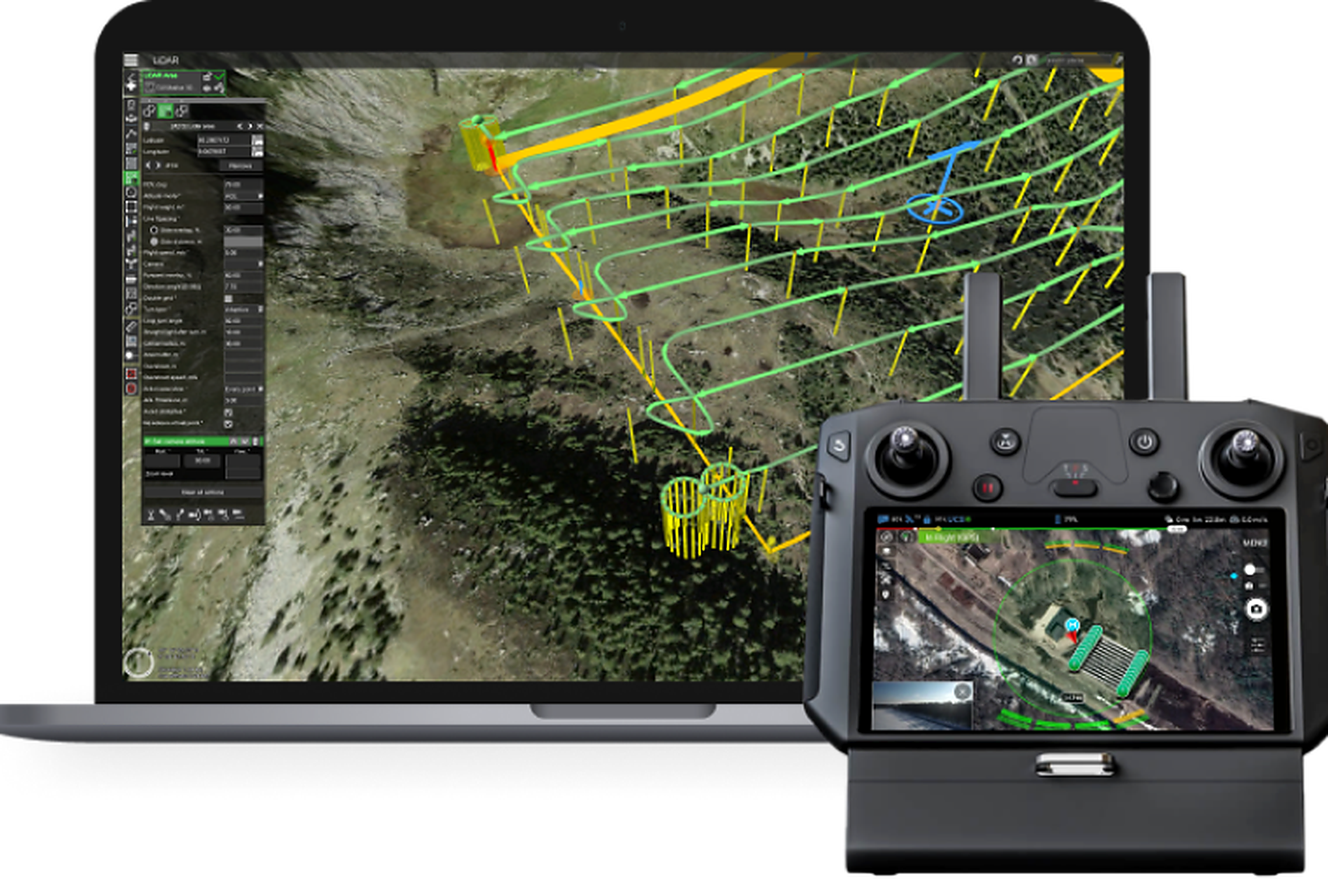
The interface can bring aircraft control, mission planning, telemetry, video, and payload functions into one operational workflow.
Human oversight remains central. Automated payload behavior should remain visible, interruptible, and subject to mission-specific permissions.
Communication Relay and Multi-UAV Connectivity
Some missions require more than direct aircraft-to-ground communication. A mission payload may be used as a temporary communication relay for field teams, remote sensors, or other aircraft.
A customer-specific unmanned aerial vehicle UAV network may support:
-
Air-to-ground data relay
-
Temporary coverage extension
-
Multi-user video access
-
Remote sensor connectivity
-
Mission-event distribution
-
Coordination between multiple UAVs
-
Separate handling of control and payload data
The final architecture depends on mission range, bandwidth, data-security requirements, terrain, antenna placement, network topology, and local regulations.
Communication-relay integration should therefore be evaluated as a complete mission system rather than as an isolated payload function.
Emergency Response and Controlled Payload Delivery
Modular integration can allow selected UAV platforms to support limited response functions in addition to observation.
Depending on aircraft capability, customer requirements, and applicable regulations, possible integrations may include:
-
Searchlights for target-area illumination
-
Loudspeakers for warnings or instructions
-
Temporary communication support
-
Medical or rescue kits
-
Radios and sensors
-
Flotation equipment
-
Controlled release of approved lightweight payloads
A VTOL logistics UAV may be useful where runway-independent deployment and controlled delivery of lightweight mission equipment are required.
However, logistics performance depends on payload mass, aerodynamic effects, release accuracy, range, endurance, operating procedure, and safety requirements.
A controlled release function must include secure retention, status feedback, operator authorization, and protection against unintended activation.
UHUAV treats payload delivery as a customer-specific mission capability rather than a universal feature of every platform.
Payload Integration for Security, Industrial, and Logistics Missions
Different missions require different integration priorities.
Security and Surveillance
A commercial-grade VTOL security UAV may prioritize EO/IR observation, thermal sensing, target tracking, reliable communication, and repeatable patrol missions.
Critical Infrastructure and Inspection
Industrial operations may require high-resolution observation, thermal inspection, mapping sensors, environmental measurement, or communication with facility systems.
Public Safety and Emergency Response
A public safety configuration may combine thermal observation, lighting, loudspeaker communication, target tracking, and delivery of approved lightweight emergency equipment.
Mapping and Data Collection
A mapping UAV may require a calibrated imaging payload, precise navigation support, stable route execution, and accurate position and timing data.
Logistics and Field Support
A VTOL logistics UAV may support controlled transport of mission equipment where vertical takeoff, fixed-wing efficiency, and customer-specific payload design provide an operational advantage.
This modular approach allows the aircraft, payload, mission software, and operator workflow to be configured around the real mission rather than a generic equipment list.
Engineering for UAV Performance
Payload integration changes UAV performance. Endurance, range, climb capability, hover efficiency, transition behavior, stability, and landing performance can all be affected.
For this reason, high-performance UAV development requires measurement and validation of the final configuration.
Testing may include:
-
Payload weight verification
-
Center-of-gravity measurement
-
Power-consumption testing
-
Ground vibration assessment
-
Communication and video-link evaluation
-
Hover and transition testing
-
Fixed-wing stability evaluation
-
Thermal monitoring
-
Failsafe verification
-
Mission-specific flight trials
Any performance UAV claim should be based on tested configuration data rather than theoretical airframe capability without the mission payload.
UHUAV evaluates UAV performance at the system level: aircraft, payload, intelligent processing, communication, mission software, and operator interface.
Customer-Specific Development Process
Each project begins with the mission rather than an equipment catalogue.
The development process may include:
-
Mission and environmental requirements
-
Payload selection or customer-supplied equipment review
-
Aircraft compatibility analysis
-
Mechanical and center-of-gravity design
-
Electrical power and thermal engineering
-
Data and communication integration
-
Mission-software adaptation
-
Ground-control integration
-
Safety logic and failsafe configuration
-
Ground and flight validation
This process allows UHUAV to develop a custom UAV solution around customer requirements while identifying technical limitations before field deployment.
UHUAV’s Modular Mission-System Approach
UHUAV develops more than aircraft mounting points. We integrate payloads into the mechanical, electrical, digital, and operational architecture of the UAV.
As a Turkish UAV technology company based in Türkiye, we focus on customizable systems that can support internationally relevant security, industrial, logistics, and public-safety missions.
By combining modular payload integration, intelligent onboard processing, flexible UAV networking, operator-centered controls, and configuration-specific performance testing, UHUAV aims to deliver mission-ready VTOL unmanned aerial system solutions that can evolve with customer requirements.
0 Comments
Add a comment