
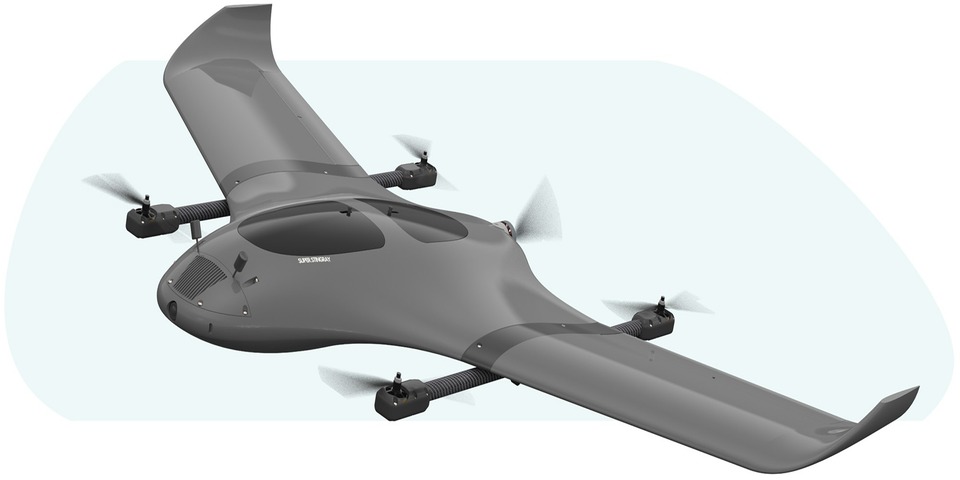
At UHUAV, we design and develop autonomous UAV platforms for security, surveillance, critical infrastructure protection, emergency response, and other mission-critical operations. Our work is centered on customizable airframes, AI-assisted mission control, modular payload integration, reliable drone-to-ground communication, and field-ready system engineering.
Rather than offering a single fixed configuration, we develop each custom UAV solution around the customer’s operational environment, mission profile, payload requirements, communication needs, and deployment conditions. This approach allows UHUAV to deliver surveillance drone systems that can evolve from industrial monitoring and perimeter protection to public safety, border observation, and rapid incident response.
Security and Surveillance as Our Primary Mission Focus
UHUAV is building its core product strategy around aerial security and persistent situational awareness. Our objective is to develop a flexible VTOL drone for surveillance that can launch without a runway, cover large areas efficiently, transmit live intelligence, and support operators before, during, and after an incident.
A single platform can be adapted as a perimeter security drone for industrial facilities, a critical infrastructure drone for energy sites, a border surveillance drone for wide-area observation, or a public safety drone for emergency services. Depending on the mission, the aircraft can be configured with day and thermal imaging, target tracking, illumination, communication relay, warning, or controlled payload-delivery equipment.
This modular strategy connects practical product development with real customer requirements. It also allows the same aircraft architecture to support multiple markets without forcing operators to purchase a completely different platform for every mission.
Custom VTOL UAV Platforms for Real-World Operations
VTOL Surveillance Platform
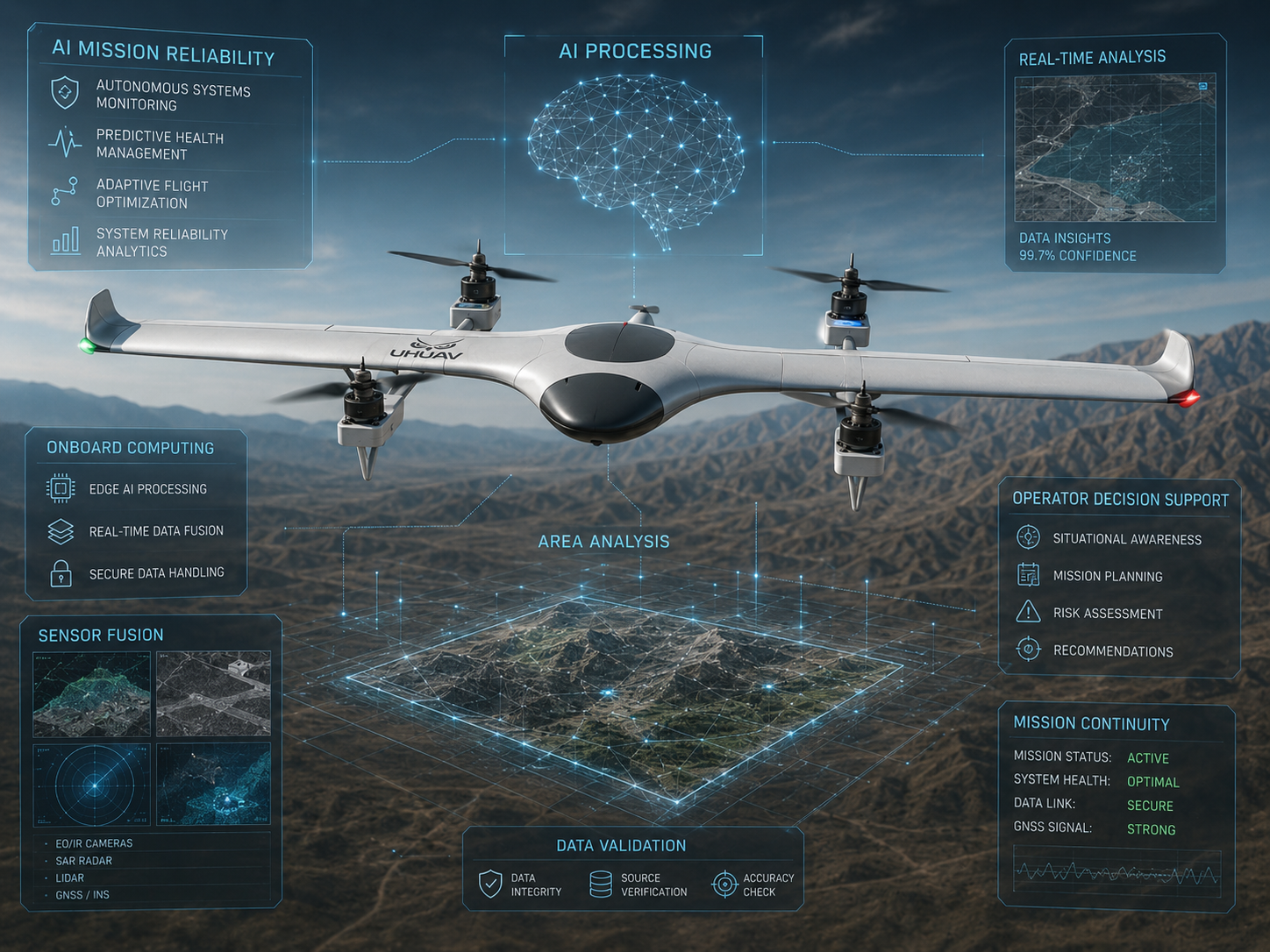
Our primary development direction is a customized VTOL drone solution that combines vertical takeoff and landing with the endurance and range efficiency of fixed-wing flight. This configuration is suitable for sites where runways are unavailable, deployment space is restricted, or operators need to move quickly between locations.
Configured as a long range surveillance drone, the platform can support wide-area patrol, route monitoring, remote facility observation, and persistent aerial intelligence. Mission performance depends on the final airframe, payload weight, weather conditions, communication architecture, and customer-defined operational requirements.
Portable Fixed-Wing and Hand-Launched UAVs
For missions where portability and rapid field deployment are more important than vertical landing, UHUAV can develop lightweight hand-launched fixed-wing systems. These platforms are suitable for reconnaissance, terrain observation, environmental monitoring, and short-notice deployment with a reduced logistical footprint.
Runway-Capable Fixed-Wing UAVs
For operations with access to prepared surfaces, runway-capable airframes can provide aerodynamic efficiency, stable takeoff and landing, and support for longer-duration missions or larger payload configurations. These systems can be tailored for surveillance, mapping, inspection, and specialized data-collection tasks.
Multirotor and FPV Platforms
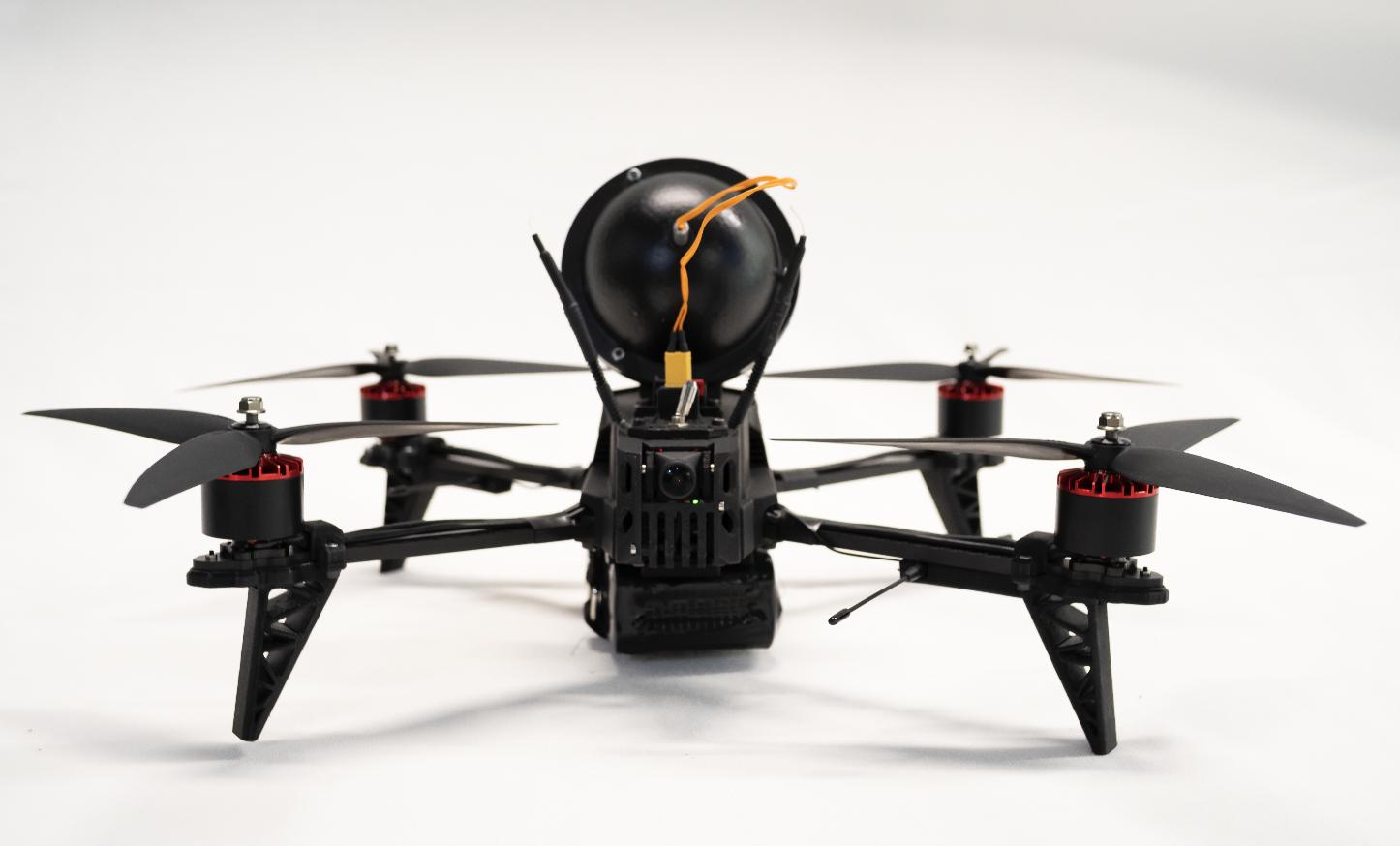
Our multirotor and FPV-oriented platforms support close-range observation, precise hovering, inspection, rapid maneuvering, and operator-controlled missions in confined or complex environments. These systems can also complement the wider VTOL platform by handling tasks that require stationary observation, low-altitude access, or immediate visual response.
Modular Payloads and Customer-Specific Integration
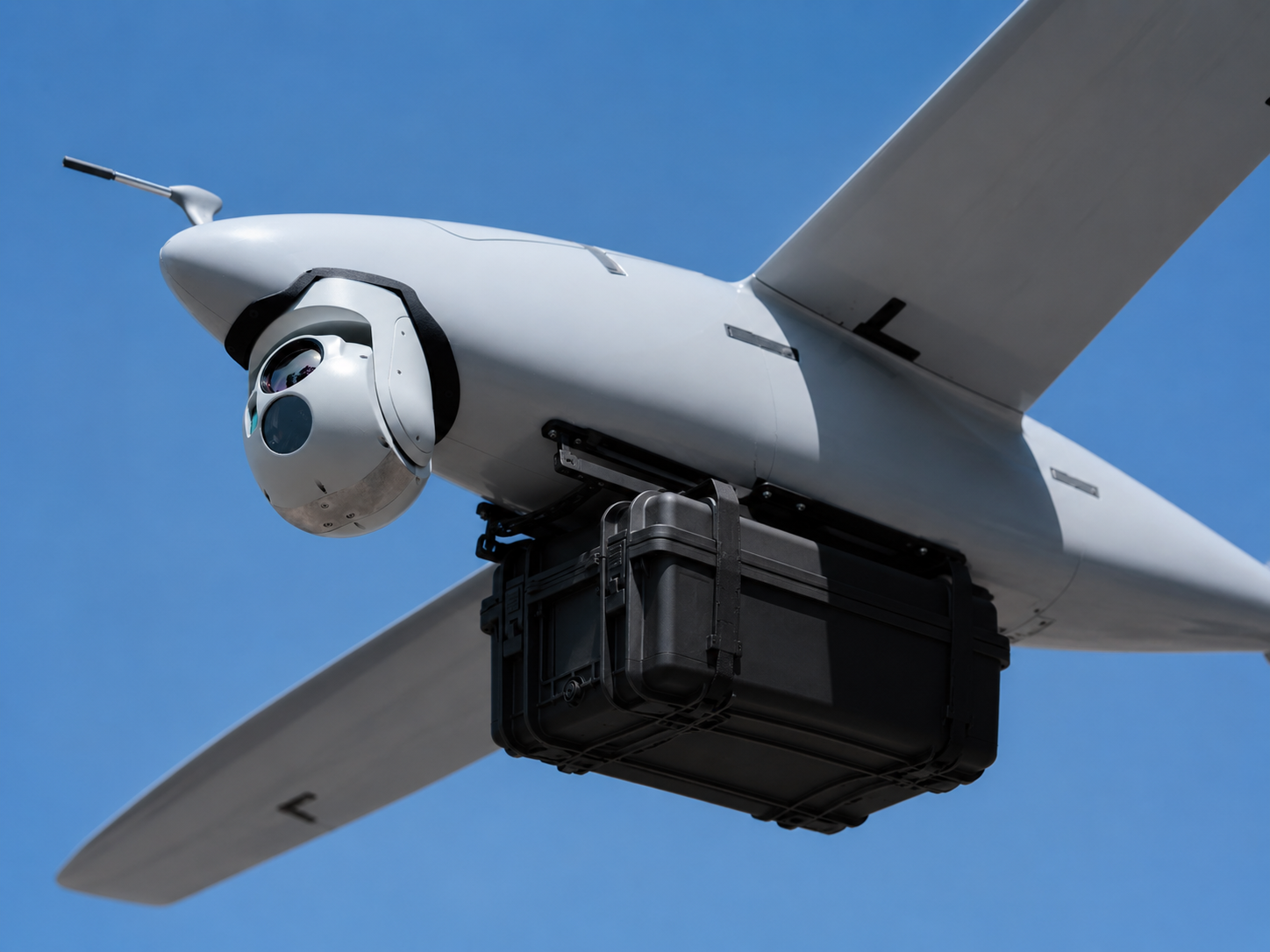
Payload flexibility is a central part of UHUAV’s engineering approach. Each platform can be developed around a custom drone payload package selected for the mission rather than forcing the mission to fit a fixed aircraft configuration.
Depending on aircraft class, available power, payload capacity, center-of-gravity limits, and regulatory requirements, supported integrations can include:
-
Stabilized EO/IR gimbals
-
Thermal cameras
-
High-zoom daylight cameras
-
Laser rangefinders
-
Mapping and inspection sensors
-
Communication relay modules
-
RF monitoring equipment
-
Spotlights and area-illumination systems
-
Loudspeakers and two-way audio equipment
-
Emergency equipment or controlled payload-release mechanisms
A swappable drone payload architecture can allow operators to change the mission configuration between flights. The same aircraft may operate as an EO/IR surveillance drone during a night patrol, a thermal surveillance drone during search and rescue, or a communications-support platform during an emergency.
Mechanical mounts, electrical power distribution, serial and Ethernet interfaces, onboard computing, software drivers, video pipelines, and ground-station controls can all be adapted as part of the integration process. Final capability is determined through engineering review and mission-specific validation.
AI-Assisted Detection, Tracking, and Mission Intelligence
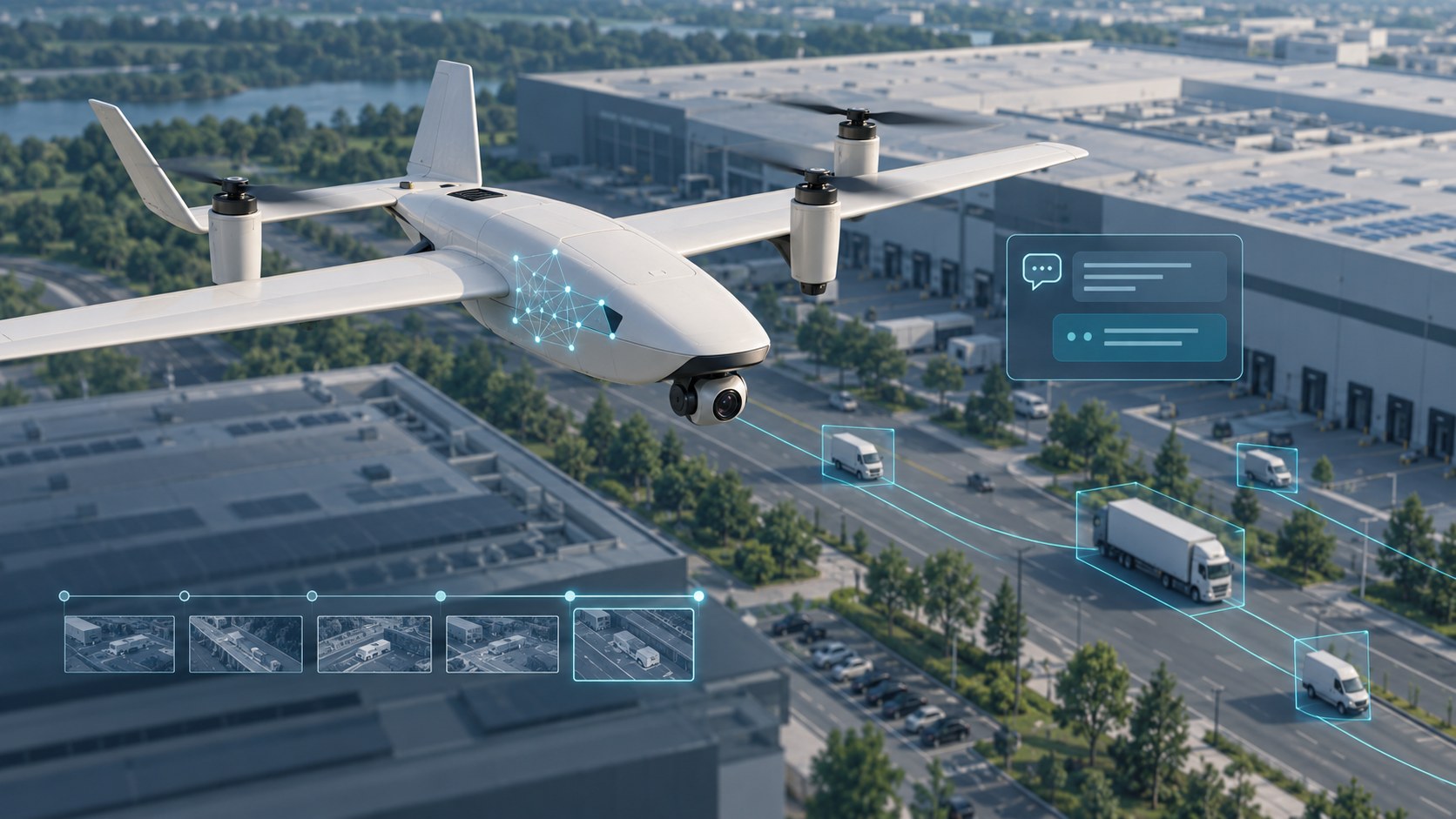
UHUAV combines onboard computing with operator-defined autonomy to improve mission consistency and situational awareness. The system can be developed as a target tracking drone using computer vision to detect, follow, and re-acquire selected people, vehicles, or other mission-relevant objects, subject to sensor quality, operating distance, environmental conditions, and the selected AI model.
An autonomous surveillance UAV can follow predefined routes, perform scheduled patrols, monitor designated areas, and return to its launch point with reduced continuous pilot workload. The operator remains responsible for mission supervision and can intervene when required.
Our longer-term mission-control architecture is designed to combine:
-
Live aircraft telemetry
-
Route and geofence status
-
EO/IR video
-
Object detections and alerts
-
Event location and time history
-
Payload status
-
Operator commands
-
Post-mission data review
This enables the platform to provide more than live video. It can help transform sensor data into structured operational information for faster assessment and more informed decisions.
Rapid Incident Response and First-Responder Support
Monitoring alone is not always sufficient. Selected UHUAV platforms can be configured to support rapid incident assessment and practical response functions.
A drone as first responder system can be dispatched toward an alarm location, transmit live video before ground teams arrive, identify access conditions, and provide early situational awareness. Depending on customer requirements and local regulations, a first responder drone may also carry a spotlight, communication relay, warning device, or lightweight emergency equipment.
An emergency response drone or incident response drone can support operations by:
-
Reaching remote or hazardous locations quickly
-
Providing live day or thermal imagery
-
Tracking a moving person or vehicle
-
Illuminating a target area
-
Broadcasting instructions through a drone with loudspeaker
-
Extending radio or network coverage
-
Delivering approved lightweight equipment to a defined location
-
Documenting the incident for later review
For appropriate use cases, drone payload delivery can support the transport of medical kits, radios, flotation devices, sensors, or other lightweight mission equipment. An emergency supply delivery drone must be engineered around payload mass, release safety, delivery accuracy, flight stability, and the applicable operating rules.
UHUAV does not treat intervention as a single universal function. Each response capability is evaluated and integrated according to the intended mission, legal environment, aircraft limitations, and customer operating procedure.
Operator-Defined Missions with Autonomous Execution
Operators can define routes, altitudes, waypoints, mission actions, payload behavior, and return procedures before launch. Once approved and activated, the aircraft can perform automated takeoff, follow the mission plan, collect sensor data, and return according to configured safety logic.
This approach reduces repetitive pilot workload while preserving human oversight. It is particularly useful for scheduled perimeter patrol, critical infrastructure monitoring, route surveillance, large-area observation, and repeatable inspection tasks.
Failsafe behavior, geofencing, communication-loss response, return-to-home logic, and payload constraints must be validated for each final aircraft configuration.
Reliable Drone-to-Ground Communication
A surveillance system is only useful when aircraft data reaches the operator reliably. UHUAV platforms are designed to support integrated command, telemetry, and video links selected according to mission range, data-rate requirements, terrain, interference conditions, and regulatory limits.
Depending on the project, communication architecture may include SDR-based radios, frequency-agile links, Ethernet and serial interfaces, redundant antennas, onboard network routing, and separate channels for control and high-bandwidth payload data.
For long-distance operations, the complete link must be evaluated as a system. Antenna placement, RF output, ground-station height, terrain, spectrum conditions, video encoding, latency, and aircraft power budget all affect real-world performance.
Operator Interface and Mission Control
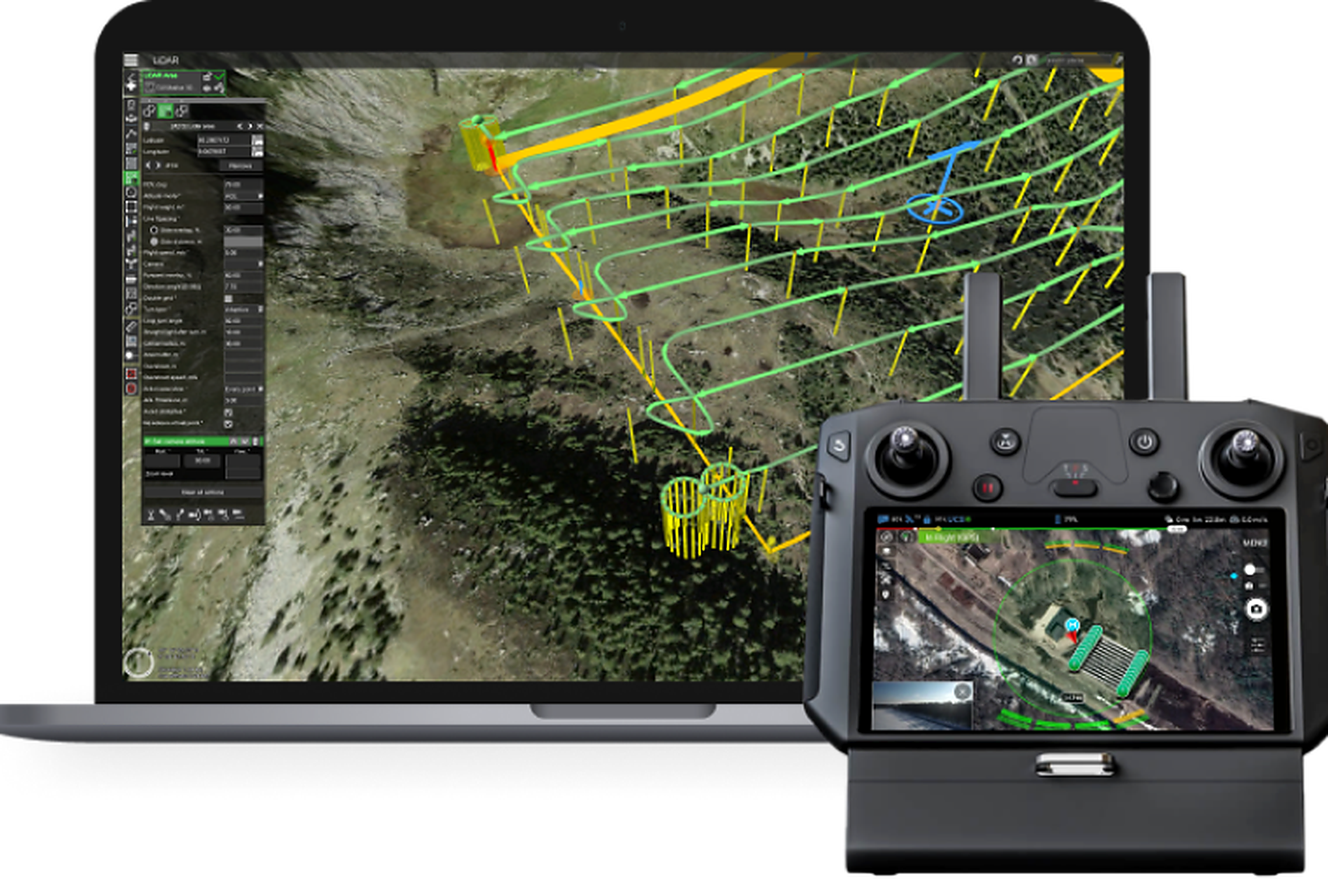
The operator interface is designed to bring aircraft control, mission planning, payload operation, and live intelligence into a unified workflow.
Mission Planning
Operators can configure flight paths, mission parameters, payload actions, geofences, and task-specific rules before launch.
Real-Time Monitoring
During flight, the system can present telemetry, route progress, aircraft health, sensor status, alerts, and live video to support continuous situational awareness.
AI-Assisted Decision Support
Onboard and ground-based processing can highlight detections, anomalies, and mission-relevant events, helping the operator focus on information that requires attention.
Human Oversight
Autonomy does not remove the operator from the mission. The operator can supervise the flight, review system decisions, modify the mission where permitted, and take manual control when necessary.
Post-Mission Review
Flight logs, detections, imagery, sensor outputs, and operational events can be reviewed after landing to verify results, improve procedures, and create mission records.
Applications
UHUAV systems can be tailored for the following applications.
Critical Infrastructure and Industrial Security
Energy facilities, solar farms, wind farms, pipelines, mines, ports, factories, logistics sites, and other large properties can use aerial patrol for perimeter observation, thermal anomaly detection, incident verification, and remote-area monitoring.
Perimeter and Facility Protection
Configured as a perimeter security drone, the aircraft can perform repeatable patrol routes, investigate alarms, observe access points, and provide live intelligence to security teams.
Border and Wide-Area Surveillance
A border surveillance drone requires endurance, long-distance communication, stabilized imaging, precise navigation, and dependable field operation. UHUAV can adapt selected VTOL configurations for wide-area monitoring and route-based observation.
Public Safety and Emergency Operations
A public safety drone can support police, fire, civil protection, search-and-rescue, and disaster-response teams with rapid aerial assessment, thermal search, communication support, and controlled emergency payload delivery.
Search and Rescue
Thermal imaging, target tracking, illumination, loudspeaker communication, and payload delivery can help teams locate and support people in difficult terrain, at night, or in hazardous areas.
Engineering Around the Customer’s Mission
Every customer operates under different terrain, climate, payload, communication, endurance, and regulatory constraints. UHUAV therefore develops systems through a requirements-driven process rather than offering only a fixed catalog configuration.
A project may include:
-
Airframe selection or adaptation
-
Payload and gimbal integration
-
Custom mounting structures
-
Onboard computer integration
-
Power and data-interface engineering
-
Telemetry and video-link configuration
-
Ground-control software adaptation
-
AI detection or tracking
-
Mission-specific automation
-
Testing, documentation, training, and support
This approach enables UHUAV to deliver a custom UAV solution that is technically aligned with the actual mission.
Our Development Direction
UHUAV is focused on building dependable, modular, and mission-configurable UAV systems for security, surveillance, public safety, and specialized industrial operations. Our immediate priority is the development of VTOL platforms with EO/IR observation, thermal imaging, target tracking, autonomous patrol, reliable communication, and swappable mission payloads.
As the platform matures, the same core architecture can support wider applications, including critical infrastructure protection, border observation, emergency response, search and rescue, and defense-relevant intelligence missions.
Closing Statement
UHUAV develops more than airframes. We build integrated UAV systems around operational goals, customer-defined payloads, autonomous mission execution, and real-world field requirements.
By combining VTOL efficiency, modular payload integration, AI-assisted mission intelligence, reliable drone-to-ground communication, and rapid-response capability, UHUAV aims to provide adaptable surveillance and security solutions for organizations operating in demanding environments.
0 Comments